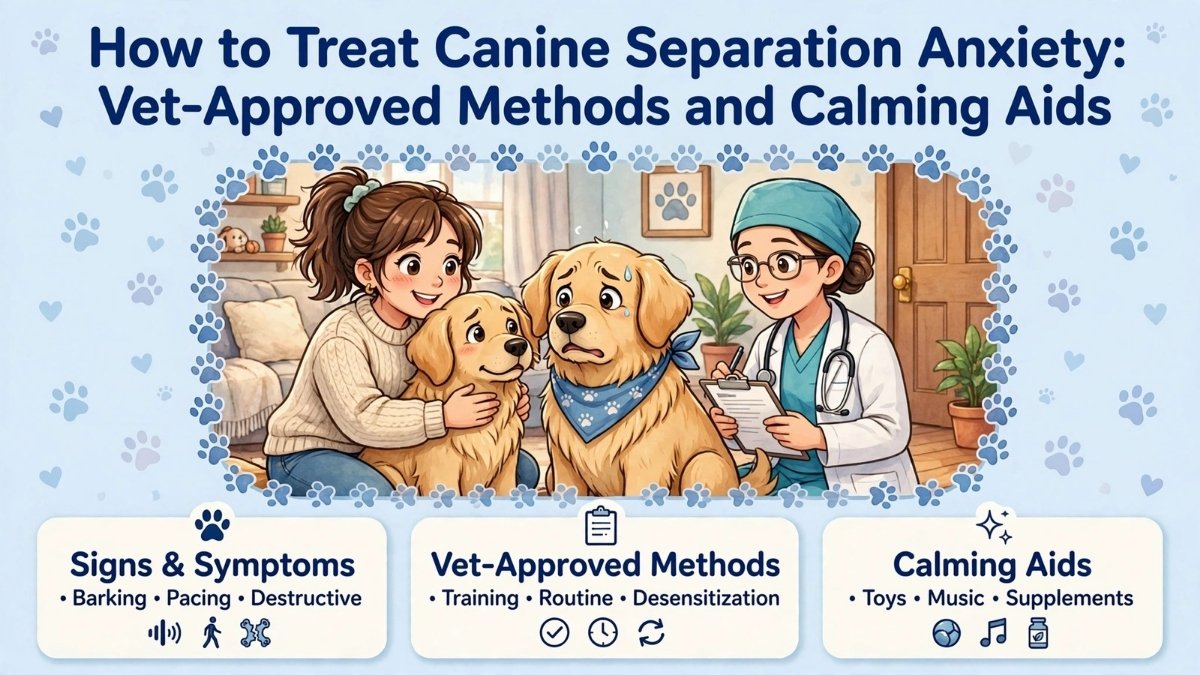
If you’ve ever come home to a chewed-up door frame, a puddle of drool on the floor, or your dog howling like his heart is breaking as you grab your keys — you are not alone. I’ve been there too.
My Labrador, Bruno, was the happiest dog in the world as long as I was in the same room. The moment I stepped out to even take the trash, he would start pacing, whining, and scratching at the door. At first I thought it was just “bad behavior.” It took one destroyed couch cushion and a very patient vet to make me realize it was pure panic. It was separation anxiety.
Separation anxiety is not disobedience. It’s not revenge for leaving. It’s a genuine panic attack that your dog feels when his safe person disappears. The good news is, it’s very treatable. It takes time, patience, and consistency, but you can help your dog feel safe again. Here are the vet-approved methods that actually worked for us.https://petkingdom.site/best-dog-insurance-comprehensive-vs-emergency/
1. First, Understand What It Really Looks Like
Many owners confuse boredom with anxiety. Vet behaviorists say true separation anxiety usually happens within the first 30 minutes of you leaving.
Common Signs of Separation Anxiety:
- Excessive barking, howling, or whining when you are gone
- Destructive chewing, especially at doors and windows
- House soiling even though your dog is fully potty-trained
- Pacing in a fixed pattern, panting, drooling
- Trying to escape the crate or room, sometimes injuring themselves
If your dog is calm for hours and then chews a shoe, that’s likely boredom. If your dog starts panicking the second you pick up your keys, that’s anxiety. Recording your dog on your phone while you are away is what my vet recommended — it’s the best way to know for sure.
2. The Golden Rule: Never Punish The Panic
This was the hardest lesson for me. I came home and saw the mess Bruno made and my first instinct was to scold him. My vet stopped me right there.
“Would you yell at a child having a panic attack?” she asked.
When you punish a dog after the fact, he doesn’t connect it to what he did 2 hours ago. He just learns that coming home is scary for him. It makes the anxiety worse. Clean up calmly, no big hellos, no big goodbyes.
3. Vet-Approved Training Methods That Actually Work
There is no quick fix. Medication alone won’t fix it, and training alone can be too slow for severe cases. Most vets recommend a combination.
A) Desensitization to Departure Cues
Dogs are smart. They know your leaving routine — keys, shoes, jacket, bag. Bruno would start trembling when I just touched my car keys.
What we did: I started picking up my keys and then sitting back on the couch. Wearing my shoes inside the house. Picking up my bag and then making coffee. I did this 10-15 times a day for a week. It sounds silly, but it broke the connection that “keys = I’m leaving forever.” The cues became meaningless.
B) Graduated Absences – The 5-Minute Game
This is the core of treatment. You teach your dog that you ALWAYS come back, and absences get longer slowly.
We started ridiculously small. I would touch the door handle, then come back. Then open the door, close it, come back. Then step outside for 5 seconds, come back. Then 10 seconds, 20 seconds, 1 minute.
- The rule: Return BEFORE your dog starts to panic. If he whines at 2 minutes, go back to 1 minute training. We only increased time when he was 100% calm at the current level. I did this 3-4 times a day, for just 10 minutes each time. Within 3 weeks, we went from 10 seconds to 30 minutes. It’s slow, but it’s permanent.
C) Create a Safe, Calm Space — Not a Prison
Many people think crating will solve it. For some dogs it does, for dogs with severe anxiety, a crate can make them injure themselves trying to escape. My vet told me to ask: does your dog love his crate when you are home? If yes, it’s a safe space. If he hates it even when you are there, don’t use it for anxiety.
For Bruno, we ditched the crate and made a small “calm corner” in the living room. His bed, a worn t-shirt that smelled like me, a chew toy, and a white noise machine. It was his den, not his jail. Keep it in a room without street-facing windows if outside noises trigger barking.
D) The Boring Departure and Arrival
I used to do long, emotional goodbyes: “Mama will be back soon, be a good boy!” That actually tells your dog that leaving is a BIG scary event.
Now, departures are boring. No eye contact, no long talk. I just leave a Kong and walk out. Same with arrivals. I come in, put my bag down, wait 3-4 minutes until he is calm, and then I greet him calmly. It teaches him that coming and going is normal, not dramatic.
4. Calming Aids That Support The Training
Calming aids are not magic cures, but they take the edge off so that training can work. Think of them as helpers.
1. Puzzle Toys and Lick Mats
A frozen Kong stuffed with peanut butter and kibble, or a lick mat with yogurt, is gold. Licking releases endorphins and calms dogs. I only give this special treat when I leave, so he started associating my departure with something good.
2. Adaptil (Dog Appeasing Pheromone)
This is vet-recommended a lot. It’s a synthetic version of the pheromone mother dogs release to calm puppies. It comes as a diffuser or collar. It doesn’t sedate them, it just creates a sense of safety. We used the diffuser near his bed for 2 months.
3. Calming Music and White Noise
“Through a Dog’s Ear” is clinically tested classical music that lowers heart rate. Even a simple white noise machine or a fan helps block outside sounds that can trigger barking.
4. Calming Supplements
Ingredients like L-theanine, casein (Zylkene), and tryptophan are often recommended by vets for mild anxiety. Always talk to your vet before starting any supplement, because quality varies a lot.
5. Anxiety Wraps / ThunderShirts
Gentle, constant pressure works like swaddling a baby. It helped Bruno during thunderstorms, and some dogs love it for separation too. Not every dog likes it, so introduce it slowly with treats.
6. Prescription Medication — When to Talk to Your Vet
For moderate to severe cases where the dog is hurting himself, not eating, or cannot be left alone at all, vets may prescribe daily medication like fluoxetine or sertraline, or situational medication like trazodone. This is NOT a failure on your part. It’s like giving a person with severe anxiety the support they need so therapy can work. Bruno was on a low dose for 4 months while we trained, and then we weaned off under vet supervision.
5. What Didn’t Work For Us
I tried getting another dog thinking Bruno was lonely. My vet warned me that separation anxiety is about YOU, not other pets, and she was right. My second dog just watched Bruno panic. Getting a second dog should never be the treatment for separation anxiety.
Also, a tired dog is not always a calm dog. A 2-hour run before leaving made Bruno physically exhausted but mentally still panicked. A 20-minute sniff walk where he could smell everything was much more calming than intense exercise.
My Daily Routine Now
This is the routine that finally gave us freedom:
- Morning: 20-min sniff walk + 5-min training (sit, stay).
- Before leaving: 10-min calm time, no play. I give his frozen Kong, turn on white noise, boring goodbye.
- While away: Camera on, I watch from my phone. Started with 30 mins, now 4 hours easily.
- Evening: No punishment, calm hello, then a fun walk.
It took us about 2 months to see real change and 4 months to be fully comfortable. There were setbacks. That’s normal.
You can do this. Your dog isn’t giving you a hard time, he’s having a hard time. With patience and the right plan, that panicked whiner can become a dog who just takes a nap and waits for you to come home.
Disclaimer: This article is for educational purposes. Please consult your veterinarian for a diagnosis and personalized treatment plan for your dog.
Frequently Asked Questions (FAQs)
Q1. Will my dog grow out of separation anxiety on his own?
Honestly, no. From my experience and what my vet said, it usually gets worse without help. The panic gets practiced every time you leave, so it becomes a stronger habit. Early training is much easier than fixing it after a year.
Q2. Should I FaceTime my dog while I’m away?
I tried it. It made Bruno worse. He could hear my voice but couldn’t find me, so he started searching the house and whining louder. Most vets advise against two-way talk. A camera where YOU can see HIM without him hearing you is better.
Q3. Is it okay to leave the TV on for my dog?
Yes, but not just any TV. Loud action movies with doorbells and barking can trigger anxiety. I leave on calm, low-volume talk radio or specifically dog-calming playlists on YouTube. The goal is background hum, not entertainment.
Q4. How long does it take to actually cure separation anxiety?
It depends on severity. For mild cases (whining, pacing), you might see improvement in 2-3 weeks of consistent training. For severe cases (destruction, self-harm), expect 2-6 months with training + vet support. Bruno’s mild-moderate case took about 3 months to feel “normal.”
Q5. Can I ever leave my anxious dog alone again normally?
Yes, absolutely. That’s the hope I want to give you. Today I can leave Bruno for 5-6 hours, he just sleeps on his bed with his Kong. A year ago I couldn’t even go to the mailbox. It’s not about never leaving — it’s about teaching him that alone time is safe and boring, and you always return.
1 thought on “How to Treat Canine Separation Anxiety: Vet-Approved Methods and Calming Aids”